Visiting CERN from Geneva: the Science Gateway, the Globe, guided tours and the closed tunnel
CERN is free, forty minutes by tram from the centre, and fascinating for anyone with a little scientific curiosity. But the LHC tunnel cannot be visited, even less so during the major technical stop that runs until 2028. What you really see, how to book and how to plan the half day.

CERN is one of the most famous physics laboratories in the world, and it opens part of its site to the public for free. For a visitor to Geneva, it is a half day that can be the highlight of the trip, or a disappointment if you arrive with the wrong expectations.
The wrong expectation is the tunnel. The LHC's great underground ring cannot be visited in normal times, and it has been a construction site since 2026. Here is what you really see, what needs booking, and how to get there.
What can you see at CERN?
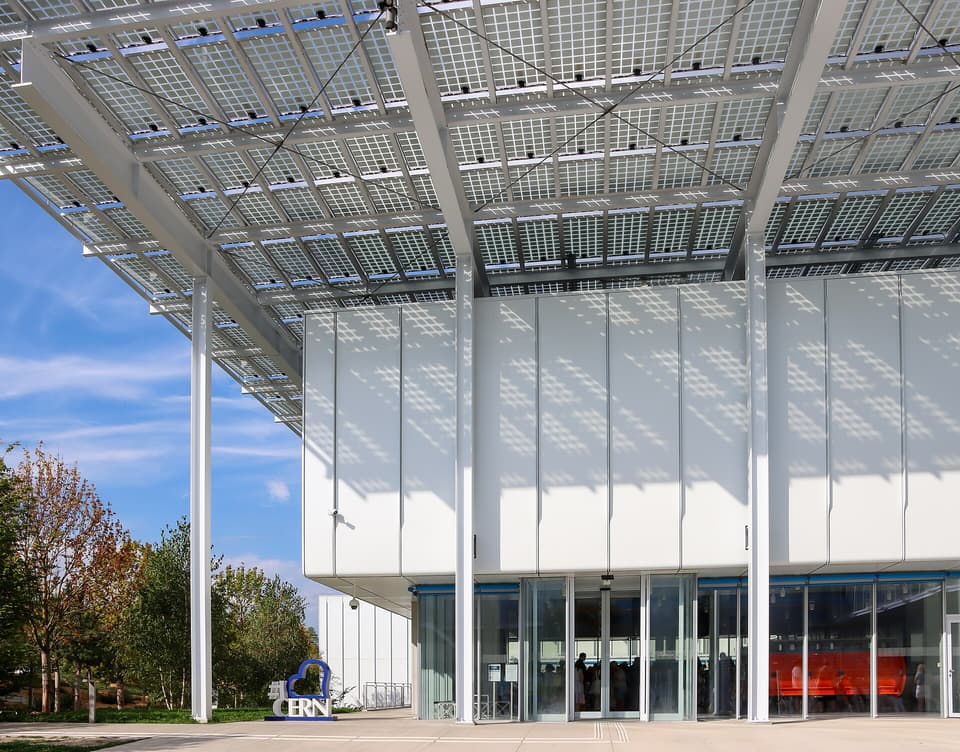
Photo: Mike Peel, CC BY-SA 4.0, via Wikimedia Commons
The Science Gateway, the visitor centre
Opened in October 2023 and designed by Renzo Piano, the Science Gateway now gathers most of the self-guided visit. Three exhibitions, Discover CERN, Our Universe and Quantum World, explain accelerators, detectors and particles with real components and hands-on displays.
Entry is free, but registration is required, at reception or online. The building opens Tuesday to Sunday, 9am to 5pm, last entry at 4:30pm. Allow one and a half to two and a half hours for the exhibitions.
Microcosm has closed: beware of old guides
Many pages still recommend Microcosm, CERN's former exhibition. It closed in 2022 and the Science Gateway replaced it. A guide that sends you there predates 2023: its opening hours and practical tips are probably out of date too.
The Globe of Science and Innovation
The large wooden sphere just opposite is the site's emblematic building and the photo everyone takes, especially when it is lit up at dusk. It is mostly used for conferences and events: what there is to visit is at the Science Gateway. On its own, the Globe does not justify the trip.
Guided tours
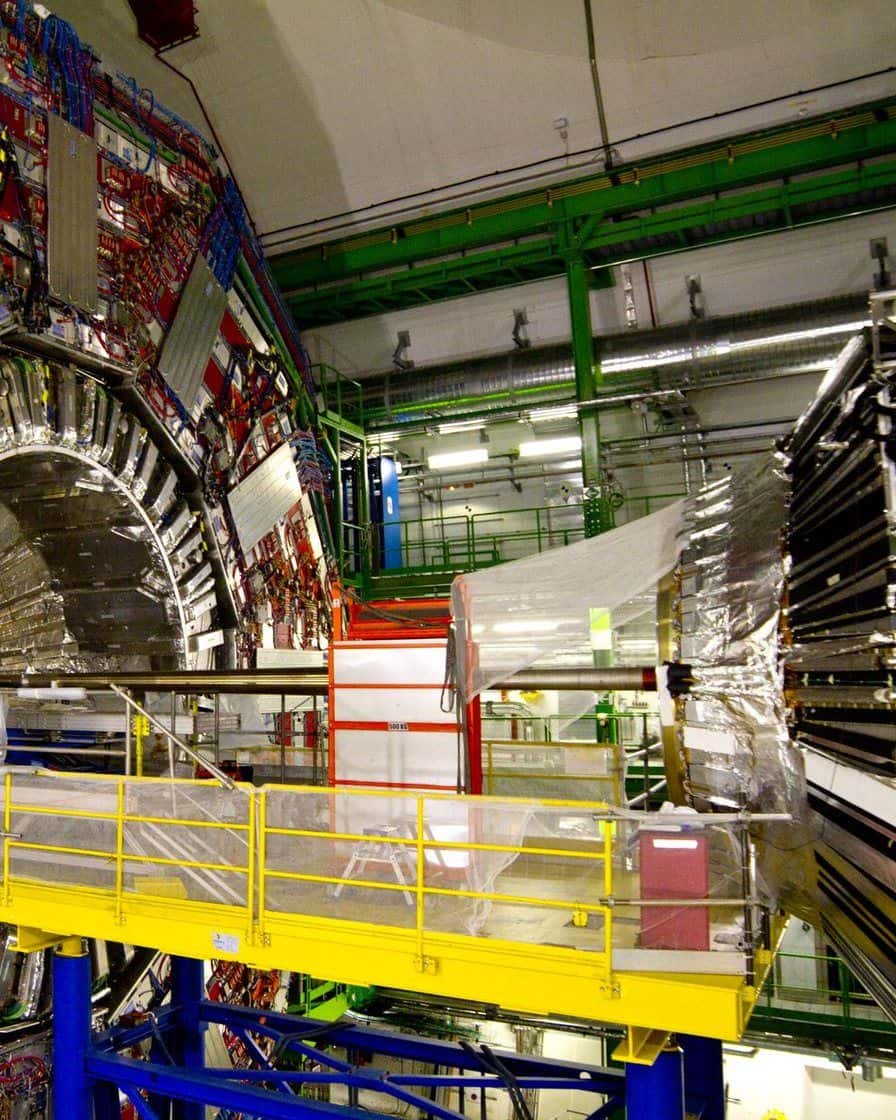
These make all the difference: a guide takes you into technical or historic buildings off the self-guided route. Without explanations, an old accelerator is just a metal hall; with a guide, it tells the story of the laboratory.
Places are limited and the content varies with availability and safety. A confirmed tour does not guarantee access to an underground facility.
How much does it cost, and do you need to book?
| Activity | 2026 price | Booking |
|---|---|---|
| Science Gateway, exhibitions | free | registration at reception or online |
| Globe of Science and Innovation | free | depending on the event |
| Guided tours | free | yes, compulsory |
| Underground facilities | no public price | exceptional during LS3 |
Everything is booked on CERN's official website, in the visits section. CERN does not publish a rule such as "six weeks ahead": slots open according to the programmes. Our advice from experience is to watch the calendar two to six weeks ahead in normal periods, four to eight weeks ahead for a weekend or school holidays.
Since the public activities are free, any paid offer promising a "CERN tour" deserves scrutiny. It may cover transport, a private guide or a combined excursion, rarely access that CERN would not give you itself. Be especially wary of promises of an "LHC tour".
Why is the LHC tunnel closed?
Because CERN has entered its Long Shutdown 3, the third major technical stop in its history. The LHC stopped at the end of June 2026, and the rest of the accelerator complex at the end of August 2026. The shutdown is due to last until 2028, with a gradual restart from mid-2028.
During these two years, the tunnels and experiments are undergoing maintenance, consolidation and upgrades, and the underground areas are occupied by technical teams. A stopped accelerator is not open to the public for all that: access remains subject to safety and the works schedule.
No public list says which tunnel will be open or closed in 2026, 2027 or 2028. Nor does the 2028 restart mean underground visits will resume straight away. An old page announcing a trip underground proves nothing during LS3.
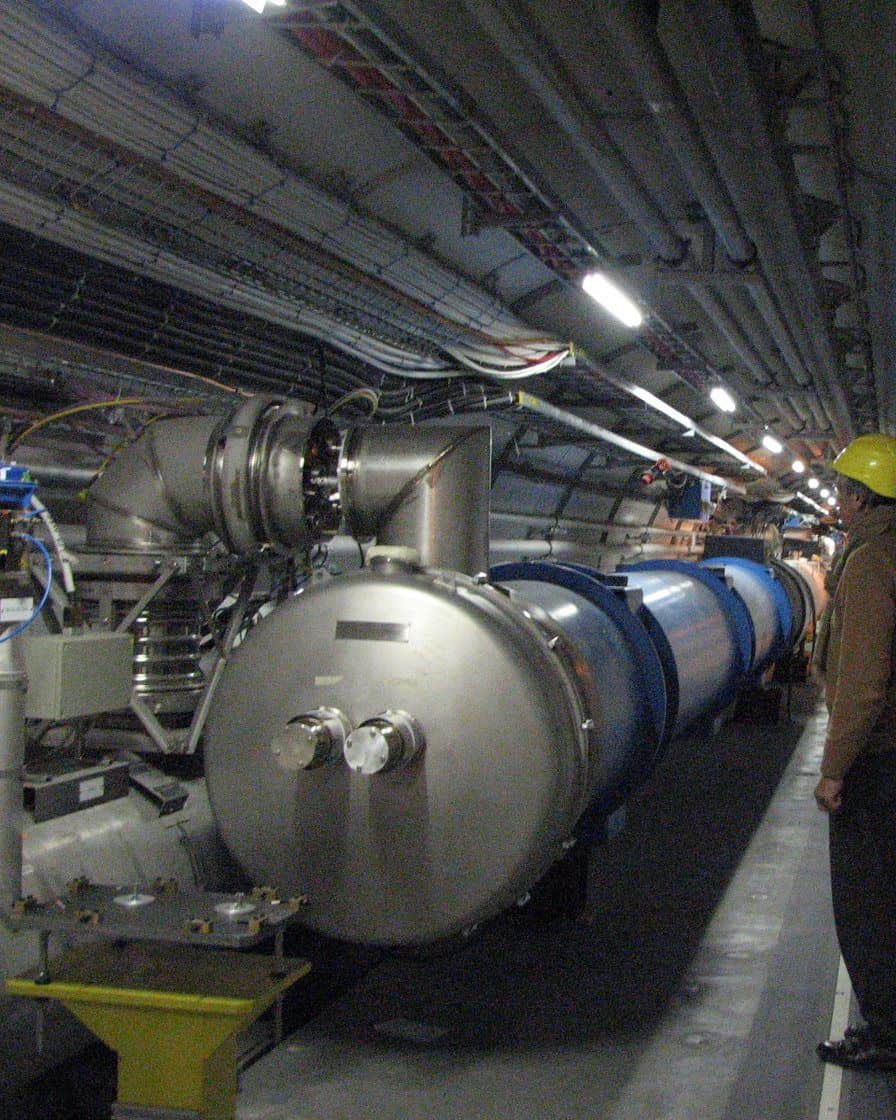
Photo: Muriel, CC BY-SA 2.0, via Wikimedia Commons
How do you get to CERN from Geneva?
Tram 18 terminates in front of CERN, in Meyrin. It runs via Cornavin station and Bel-Air, and our OpenStreetMap check has it starting from Palettes, in the south, via Carouge. The tpg show 54 minutes for the whole line; from the centre, allow 30 to 50 minutes depending on your stop.
CERN is within the canton, so in zone 10: an ordinary ticket is enough, and your hotel's Geneva Transport Card makes the journey free. Fares and how the network works are in getting around Geneva, and choosing the right ticket in which pass to visit Geneva.
The site is on the French-Swiss border, far from the centre: it is an outing in its own right, not a detour between two museums. It is marked on our map of Geneva, to the north-west.
How much time should you allow?
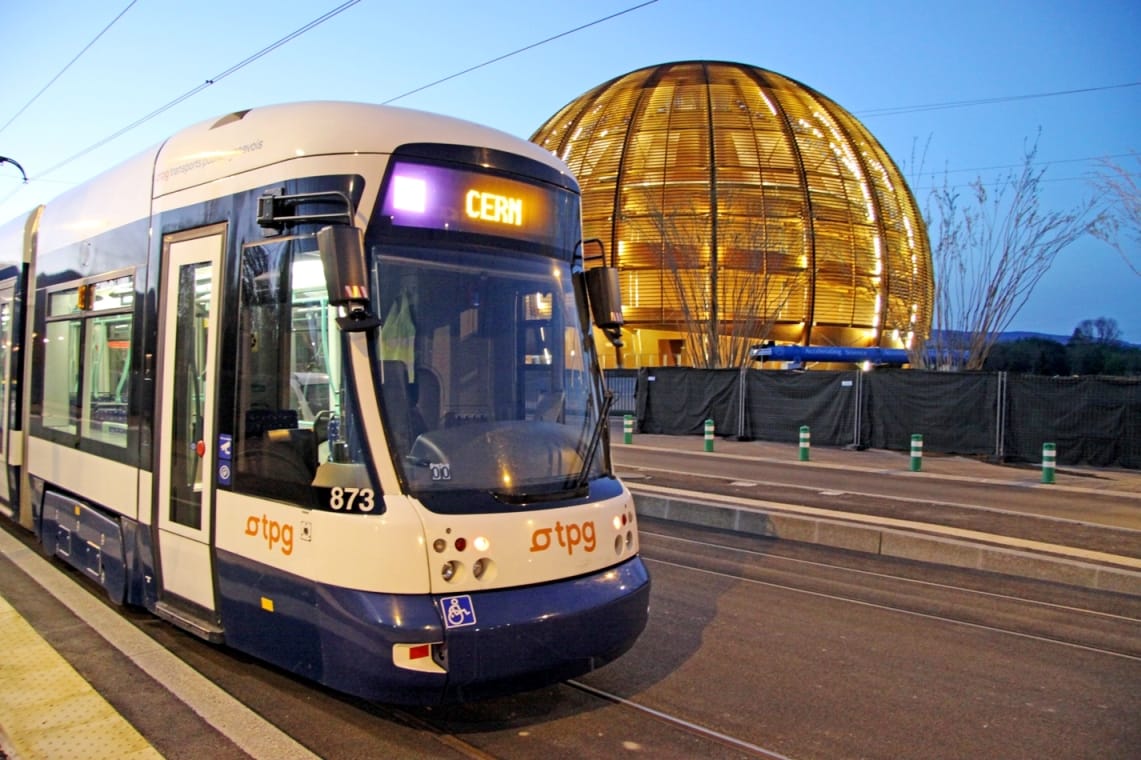
Photo: Darkzink, CC0, via Wikimedia Commons
| Programme | Time on site |
|---|---|
| Science Gateway only | 1.5 to 2.5 hours |
| Science Gateway and a photo of the Globe | 2 to 3 hours |
| With a guided tour | 3 to 4 hours |
Add the tram there and back: a full visit takes half a day. These durations are our estimates; CERN publishes none. The best time is early in the day on a weekday, when there are fewer groups; for a guided tour, the best slot is whichever one you can get.
Do you need to speak French, and from what age?
French is not necessary: signage and the main content are largely in English, and guided tours exist in several languages depending on the slot. A tour booked in English is the safest choice for an international audience.
Some tours require a minimum age and ID, but no single rule is published: read the slot's details when booking. With young children, the Science Gateway exhibitions remain accessible without these constraints.
Is CERN worth the half day?
- Yes for adults and teenagers curious about physics, space or engineering, especially with a booked guided tour.
- Yes in bad weather: everything is indoors.
- No if you are looking for a quick, spectacular attraction in under an hour.
- No if the aim is to see the LHC: it is underground, secured and under works until 2028.
For a stay centred on Watches and Wonders, CERN offers an interesting counterpoint to watchmaking: Geneva's other great speciality of precision measurement. Our page watchmaking in Geneva offers the watch side of the same day.
CERN is free, and the rest of the day can be filled: guided city tours, cruises on Lake Geneva and excursions from Geneva are grouped on our partner's page.
See activities in Geneva →Partner link: booking through this link supports the site at no extra cost to you.How do you fit it into a stay?
CERN fills a half day on its own. It is a good replacement for International Geneva in our weekend itinerary, but does not combine with it on the same day: they are two hubs far from the centre. For the rest of the programme, see things to do in Geneva.
If you are staying on the French side, Ferney-Voltaire and Prévessin are close to the site, as explained in where to stay in Geneva. And for rainy days, CERN joins the list of indoor museums on our page on Geneva's seasons.
For an early start to CERN, stay near Cornavin station: tram 18 stops there, with no change all the way to the CERN terminus.
See hotels near Cornavin →Partner link: booking through this link supports the site at no extra cost to you.Sources
Sources: CERN (Long Shutdown 3, accelerator reports, LHC disconnection, laboratory visits), tpg (line 18). Route and stops of tram 18: OpenStreetMap, checked on 22 October 2026.
Booking lead times and visit durations are advice from experience, not rules published by CERN. Research carried out on 22 October 2026.
Frequently asked questions
Is visiting CERN free?
Can you visit the LHC tunnel?
How do you get to CERN from central Geneva?
How long does a visit to CERN take?
How far ahead should you book a CERN guided tour?
Mathieu Jaquet
Mathieu guided groups through the Old Town for seven years, from St. Pierre Cathedral to the Bastions. He builds his routes on foot, stopwatch in hand, and cuts whatever does not fit into a real day. He would rather write that a visit is not worth the ticket than pad out a list.